
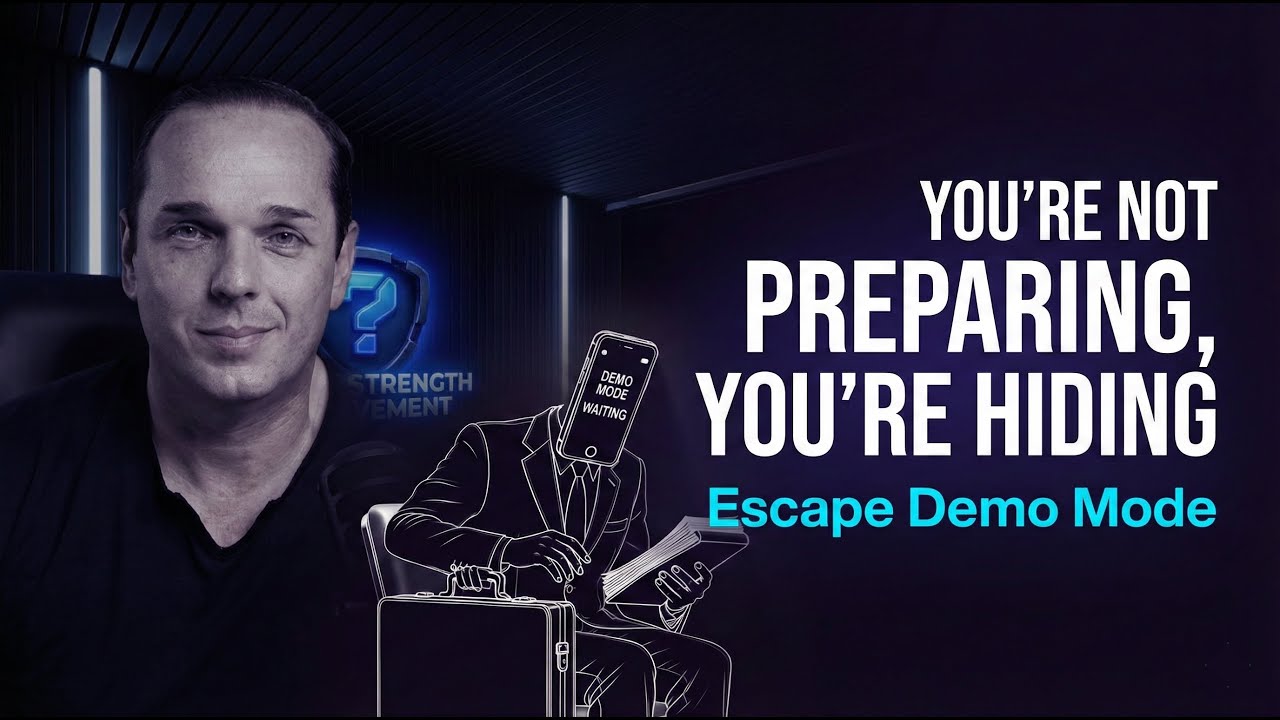
The graveyard of “almost ready” — and why Demo Mode is the slow murder of your potential
How long have you been “working on it”?
The business. The book. The project. The conversation. The change.
How long have you been researching, planning, preparing, perfecting?
Six months? A year? Three years? A decade?
How many courses have you bought? How many books have you read? How many spreadsheets have you built? How many conversations have you had about the thing instead of doing the thing?
Here’s what you tell yourself: I’m almost ready. I just need a little more information. A little more preparation. A little more certainty.
Here’s what’s actually happening: You’re not preparing. You’re hiding.
And the thing you’re hiding from isn’t failure. It’s yourself.
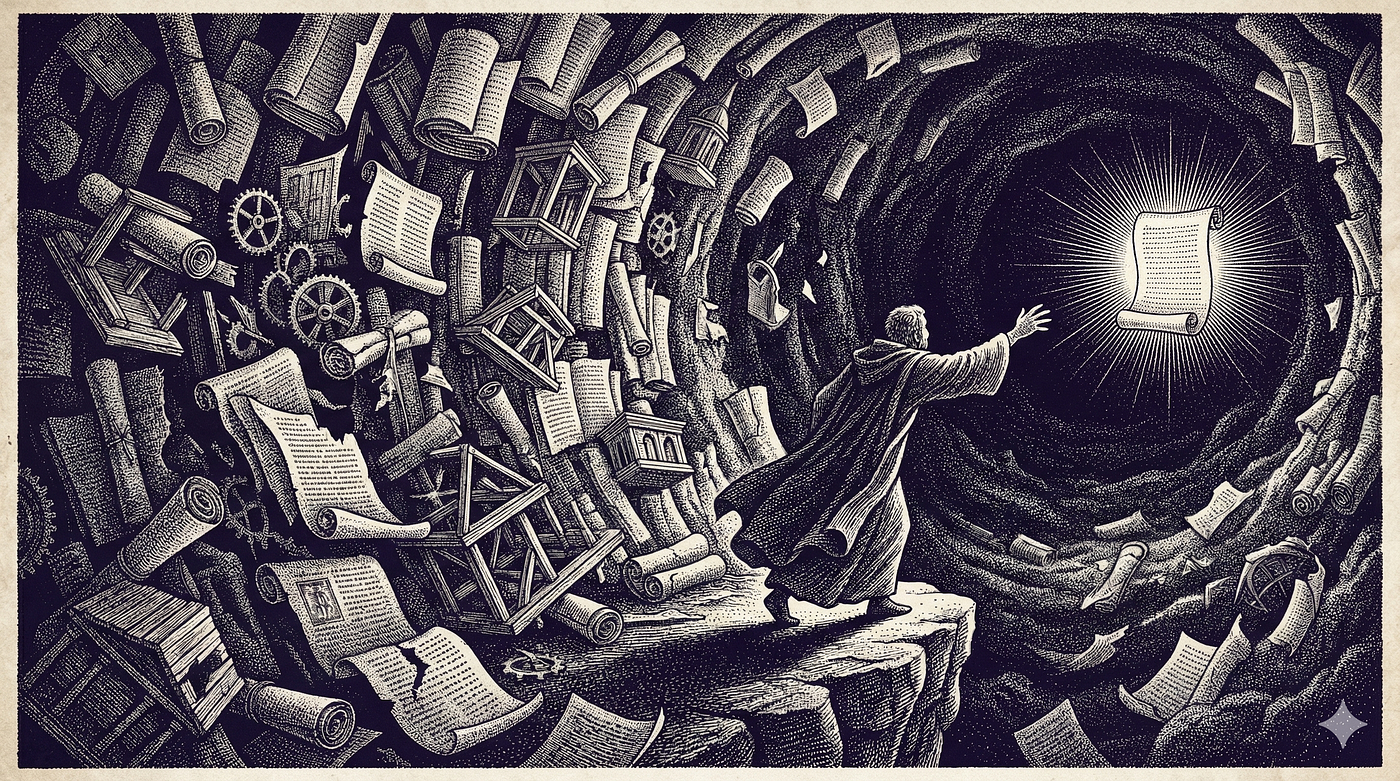
The Anatomy of Demo Mode
I call it Demo Mode.
Like the display laptops at Best Buy. They look functional. The screen lights up. You can click around. But try to actually use one — try to save a file, install a program, do real work — and you discover the truth.
It’s not a real computer. It’s a simulation of a computer. A performance of functionality. All surface, no substance.
That’s what Demo Mode does to a human life.
You look like you’re building something. You have the Notion boards. The research folders. The business plan. The “strategy.” You can talk eloquently about what you’re “working on.”
But nothing ships. Nothing launches. Nothing exists outside your head and your hard drive.
[INSERT IMAGE — HOLOGRAPHIC BLUEPRINT] Prompt: A transparent holographic workflow diagram with hundreds of interconnected nodes and plans, all floating above empty hands against a black void. Blueprint glows in soft neon teal and white with “DEMO MODE” watermarked faintly in the background.
You’re a display model of a person. All the visible indicators of progress. None of the actual output.
Demo Mode disguises itself as virtue. Preparation feels responsible. Research feels smart. Planning feels professional. Perfectionism feels like quality control.
Society rewards the appearance of diligence. Your friends say “wow, you’re really thorough.” Your family says “it’s good that you’re being careful.” Your own brain releases little hits of dopamine every time you add another item to the plan, read another article, buy another course.
You feel productive. You feel busy. You feel like you’re making progress.
But you’re not moving. You’re circling.
A shark that stops swimming dies. A person in Demo Mode never stops moving — they just never move forward.
The cruelest part? Demo Mode feels like work. It’s exhausting. You’re tired at the end of the day. You’ve spent hours on “the project.”
But the project doesn’t exist yet. The project is still theoretical. The project is still safe inside your head where no one can judge it, criticize it, reject it. Where it can stay perfect. Where it can stay potential.
The Cost — What Demo Mode Has Already Taken From You
I need you to feel something right now.
I need you to feel the weight of what Demo Mode has already taken from you. Not theoretically. Actually.
Think about the thing you’ve been “working on” the longest. Now count backwards. When did you start? When did you first have the idea, first feel the pull, first know you needed to do this thing?
Write down the date. The year.
Now calculate how long ago that was.

That time is gone.
Those months. Those years. That portion of your one wild and precious life — spent in the waiting room. Spent in the warm bath of preparation. Spent believing that someday you’d feel ready.
You didn’t spend that time preparing. You spent it dying.
Every day you stay in Demo Mode, a version of you dies. The version who would have started last year. The version who would have failed, learned, and come back stronger. The version who would have shipped something imperfect and watched it become something real.
Those versions are dead. You killed them with patience. With prudence. With preparation.
The failure you’re avoiding? You’re experiencing it anyway. You’re not avoiding failure by staying in Demo Mode. You’re failing in slow motion.
You’re failing so slowly that you can pretend it’s not happening. You’re failing at such a low intensity that it doesn’t trigger the alarms. But the result is the same.
The project that could have existed doesn’t exist. The business that could have been built isn’t built. The book that could have been written isn’t written. The conversation that could have changed everything was never had.
And you don’t even get the dignity of a dramatic failure. You just… fade. Quietly. In a comfortable chair. Surrounded by plans.
The Infection — The Lies You’re Believing
Let’s pull out what’s actually rotting inside this wound. The infection has a few strains. See which ones have colonized your mind.
Lie #1: “I need more information”
No, you don’t.
You have enough information to start. You’ve had enough information for months. Maybe years.
The information you’re gathering now isn’t making you more prepared. It’s making you more paralyzed. Every new input is another variable. Every new perspective is another consideration. Every new course is another framework to reconcile with the seventeen frameworks you’ve already collected.
Information past a certain point doesn’t clarify. It clouds.
You’re not learning anymore. You’re hoarding. And hoarding is what people do when they’re afraid of scarcity — when they don’t trust that they’ll be able to figure it out once they start.
Lie #2: “I need to wait until I feel ready”
You will never feel ready.
Readiness is not a feeling. It’s a decision.
The feeling you’re waiting for — that sense of confidence, certainty, “okay NOW I’m prepared” — it doesn’t come before action. It comes after.
You feel ready by doing the thing and surviving it. Not by preparing for the thing and imagining it.
You are waiting for a bus that doesn’t run on this route.

Lie #3: “I want it to be perfect”
No, you want it to be safe.
Perfectionism isn’t about quality. It’s about control. It’s about making something so bulletproof that it can’t be criticized, rejected, or judged.
But here’s what perfectionism actually produces: nothing.
The perfect version of your project doesn’t exist. It can’t exist. Because perfection is an asymptote — you can approach it forever and never arrive.
What you’re actually doing is using “perfect” as an excuse to never submit yourself to judgment. As long as it’s not finished, it can’t be evaluated. As long as it’s still in development, you can’t be exposed.
Perfectionism is cowardice wearing a lab coat.
Lie #4: “What if I fail?”
What if you do?
Seriously. Play it out. You launch the thing. It fails. People see it fail. Some people judge you. Some people are disappointed. Some people say “I told you so.”
Then what?
You learn what didn’t work. You adjust. You try again. Or you don’t, and you move on to something else.
That’s it. That’s the worst case.
You’re treating failure like it’s death. It’s not. It’s data. It’s the only way to generate the information you actually need — information that no amount of preparation can give you.
The market doesn’t exist in your spreadsheet. It exists in reality. And the only way to get data from reality is to ship something into it.
Lie #5: “People will think I’m stupid”
Yes. They might.
Some people will see your imperfect first attempt and think you’re an amateur. A fool. Stupid.
So what?
What’s the alternative? Stay in Demo Mode forever so that no one ever has the chance to think you’re stupid?
That’s not intelligence. That’s imprisonment.
The people who matter — the people who’ve actually built things — know that every first version is rough. They know that the only way to get good is to be bad first. They know that shipping imperfect work is the sign of someone serious, not the sign of someone incompetent.
The people who judge you for starting? They’re in Demo Mode too. They’re protecting their own paralysis by mocking anyone who threatens it.
Their opinion is the opinion of the dead. And you’re trying to live.
The Math You Can’t Ignore
Let me show you what Demo Mode actually looks like from the outside. Because you’ve been living inside it so long, you’ve lost perspective.
You are going to die.
Not metaphorically. Actually. Probably sooner than you think.
You have a finite number of days. A finite number of hours. A finite number of moments in which you can create, build, express, contribute.
And you’re spending them in preparation. You’re spending them getting ready for a life you’re not living.
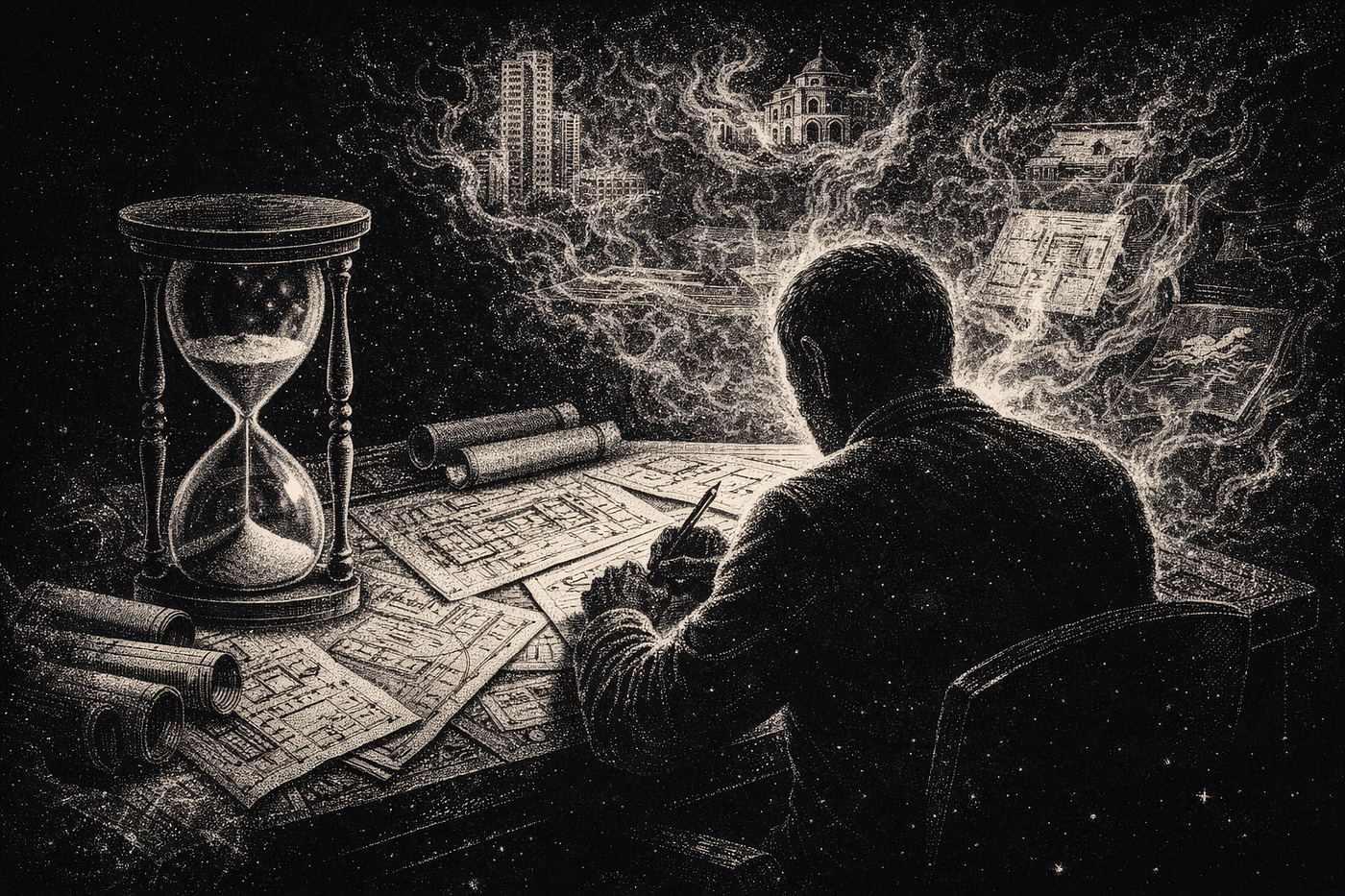
You’re spending your life in the waiting room of your own existence, filling out forms, reading blog posts, watching YouTube videos, assuming that eventually someone will call your name and you’ll be allowed to enter the actual experience.
No one is going to call your name.
There is no permission. There is no “ready.” There is no moment when the clouds part and a voice says “NOW you may begin.”
There is only you. And the ever-shrinking runway of your life. And the thing you keep saying you’re going to do.
Here’s what the math looks like:
If you’ve been in Demo Mode for three years, and you live another 40 years, you’ve spent 7.5% of your remaining life preparing for something that doesn’t exist.
If it’s been five years? That’s 12.5%.
A decade? 25% of your remaining life. Gone. Spent in the waiting room.
That’s not caution. That’s tragedy.
The Mechanics of Escape
Okay. The wound is open. The infection is exposed. You can smell it.
Now let’s clean it out. Let’s heal.
Here’s how you escape Demo Mode:
Mechanic #1: Ship at “Done,” Not “Perfect”
There’s a moment in every creative process where the thing is done. Not perfect — done. It works. It exists. It communicates something. It’s rough around the edges, but it’s complete.
Perfectionism tells you that moment is just the beginning. That now you need to polish, refine, iterate, improve.
Perfectionism is lying.
That moment — the moment of “done” — is the moment to ship.
“Done” is when you let it go. “Perfect” is the horizon you’ll chase until you die.
Practice identifying the moment of done. It feels uncomfortable — there’s still so much you could improve. That discomfort is the signal. When you feel that specific anxiety — “but it’s not ready” — that’s usually exactly when it’s ready.
Ship at the discomfort. Not past it.

Mechanic #2: Collapse the Wavefunction
In quantum physics, a particle exists in multiple potential states simultaneously — until it’s observed. Then it “collapses” into a single state. All other possibilities vanish.
Decision works the same way.
While you’re in Demo Mode, your project exists in superposition. It could be anything. It could be perfect. It could be the thing that changes everything. The fantasy is infinite.
The moment you ship, the wave collapses.
Your project becomes one specific thing. Not the infinite possibility — the finite reality. And all those other versions you imagined? They die.
This is why shipping feels like grief. Because it is. You’re killing the fantasy to birth the reality.
Demo Mode is the refusal to mourn. You’re keeping all those potential versions alive by never committing to one actual version. You’re protecting the fantasy at the cost of the reality.
But here’s the truth: the fantasy was never real. It was just a dream you were having while your life passed by.
Collapse the wave. Let the fantasy die. Meet the reality.
Mechanic #3: Make Friends with Judgment
The fear of being judged is the engine of Demo Mode.
You stay in preparation because preparation can’t be judged. Only output can be judged. Only shipped work can be criticized.
So you have to change your relationship with judgment.
Here’s the reframe: Judgment is the price of participation.
If you want to be in the arena — if you want to build things, create things, contribute things — you will be judged. That’s not a bug. It’s a feature. It’s the cost of admission.
The people who avoid judgment aren’t winning. They’re not even playing. They’re sitting in the stands, heckling the players while pretending they’re coaches.
Being judged means you showed up. That’s more than most people ever do.
Mechanic #4: Shrink the Scope
Demo Mode often starts with scope creep.
You wanted to write a blog post. Then it became a series. Then it became a book. And now it’s so big, so complex, so ambitious — that you can’t even start.
Shrink it back down.
What’s the smallest viable version of the thing you’re trying to create? Not the version that would impress people. Not the version that would go viral. The version that could exist by the end of this week.
Ship that version.
The dirty secret of Demo Mode is that it often hides behind ambition. “I’m preparing for something BIG.” But big things are built from small things. And small things have to be shipped before they can grow.
You can’t iterate on something that doesn’t exist. Ship small. Ship often. Let it grow.
Mechanic #5: Announce Irrevocably
Tell someone you’re shipping by a specific date.
Not “soon.” Not “when it’s ready.” A date. A deadline. An external commitment that you cannot easily escape.
Demo Mode thrives in private. In the quiet of your own head, there’s no accountability. You can always push the timeline. Always add more preparation. Always wait a little longer.
But if you’ve told people — if there’s a date on the calendar that others are expecting — the math changes.
Now the pain of not shipping (embarrassment, broken promise) is concrete and imminent. And the pain of shipping imperfectly becomes relatively smaller.
This is using social pressure as a commitment device. It’s not weakness. It’s strategic. It’s acknowledging that your willpower alone isn’t enough to overcome the gravity of Demo Mode.
Announce it. Then you have to do it.
The Invitation
You came here stuck.
You came here with a project in limbo. A dream in the waiting room. A version of yourself that you haven’t had the courage to become.
You came here in Demo Mode.

Here’s what I want you to understand:
Demo Mode isn’t preparation. It’s grief avoidance. It’s the refusal to collapse the wave. The refusal to kill the fantasy in order to birth the reality. The refusal to mourn the versions of the project that won’t exist once you commit to the version that will.
And I get it. I do.
Mourning is painful. Commitment is scary. Judgment is exposing.
But here’s what’s scarier: Dying with the project still inside you.
Getting to the end and realizing you spent your whole life preparing for a thing you never actually did. That’s the real tragedy. Not failure — unrealized potential.
So here’s my invitation:
Ship something this week.
Not the whole thing. Just something. The smallest viable version. The imperfect draft. The rough first attempt.
Stop gathering information. Stop refining the plan. Stop preparing.
Start.
Not when you’re ready. Not when it’s perfect. Now.
Because you will never feel ready. The moment of readiness doesn’t exist. It’s a fiction that Demo Mode uses to keep you trapped.
The only way out is through. The only way to feel ready is to do the thing and survive it.
I’ve been in Demo Mode. I’ve spent years preparing for things I never shipped. I’ve wasted versions of myself with patience and prudence and perfectionism.
And I’m done.
I’m building The Stupid Movement because I believe the world needs more people who are willing to look stupid. More people who ship before they’re ready. More people who collapse the wave and mourn the fantasy and build the reality.
Are you one of those people?
The question that remains: What’s the smallest thing you could ship by the end of this week?
Own Your Stupid. Rewrite Your Story.
What is Demo Mode?
Why does Demo Mode feel productive even when nothing is happening?
What are the biggest signs I’m stuck in Demo Mode?
Is Demo Mode about fear of failure?
Why is perfectionism described as a trap in this article?
What does it mean to ‘ship at done, not perfect’?
What does ‘collapse the wavefunction’ mean in practical terms?
Why does shipping feel like grief?
How do I stop caring about being judged?
What’s the Stupid Movement connection to Demo Mode?
How do I ‘shrink the scope’ without shrinking the dream?
Why does announcing a deadline help escape Demo Mode?
What is the ‘smallest thing I can ship this week’ question designed to do?
If I’ve been in Demo Mode for years, is it too late?
What’s one sentence that captures the core message of Demo Mode?