
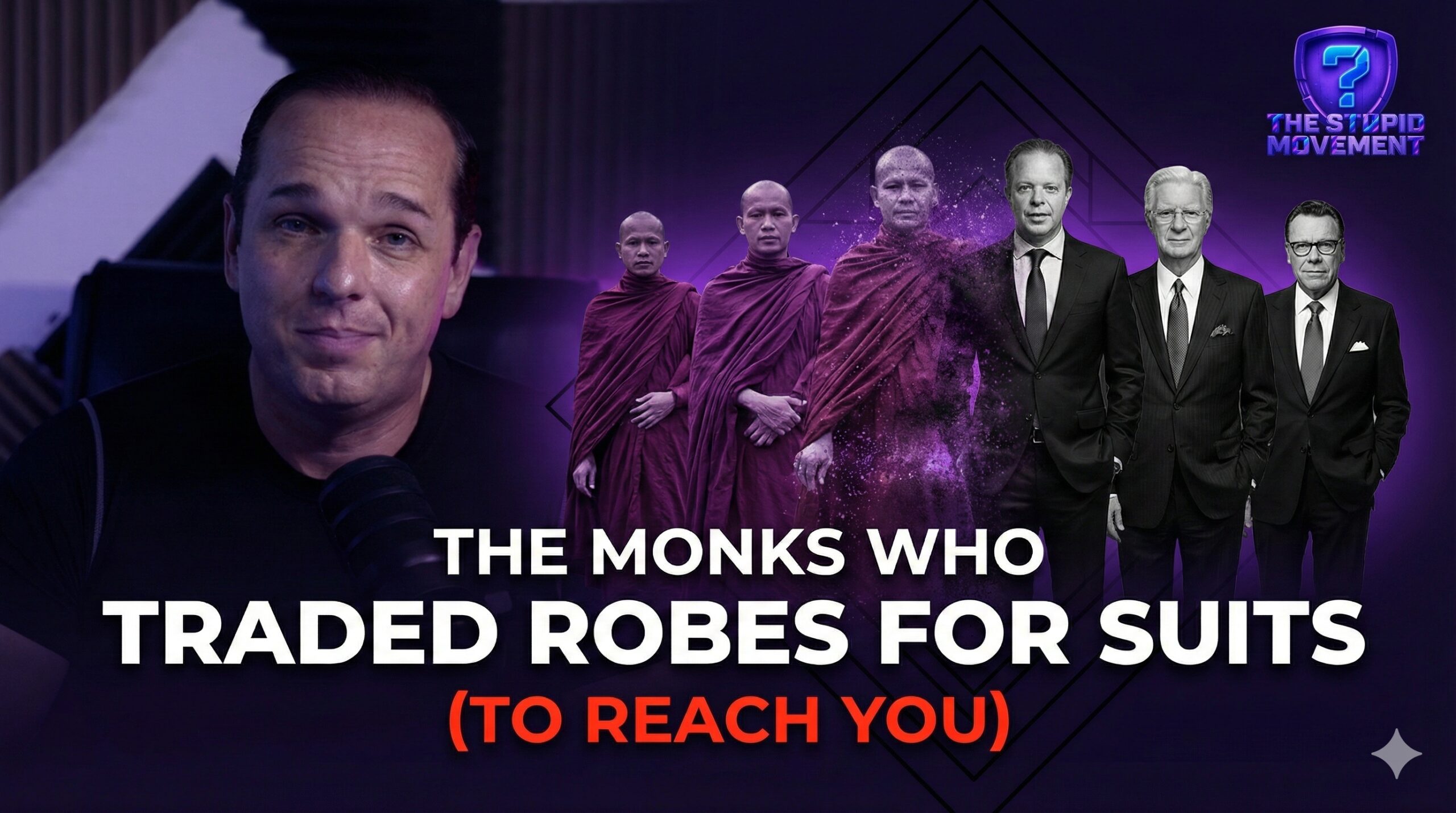
How Bob Proctor, Joe Dispenza, and Earl Nightingale smuggled ancient meditation past your bullshit detector
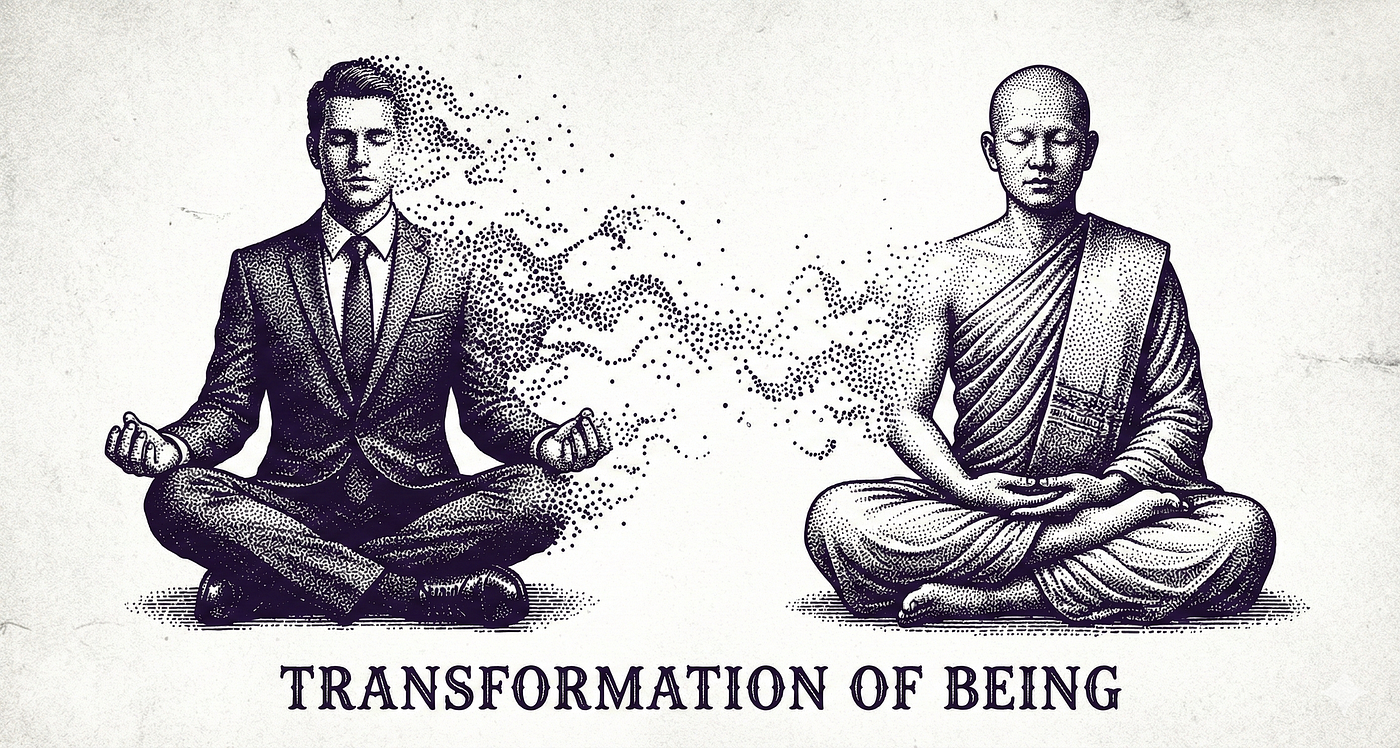
Bob Proctor sits in a chair and asks you to close your eyes. “I want you to come with me to a place I call the room of images.”
Joe Dispenza begins a meditation: “Become nobody. Move from somewhere to nowhere, from some time to no time.”
Earl Nightingale tells you: “Write down exactly what you want. Read it every morning and every night.”
None of them are wearing robes. None of them mention Buddha.
But make no mistake — they’re teaching you how to meditate.
They just removed the parts that would make your ego reject it.
The Translation
Here’s what they actually did: They took ancient contemplative practices and translated them into language your bullshit detector wouldn’t flag.
Pranayama → “Breath work for nervous system regulation”
Bhavana → “Visualization protocols”
Mantra → “Affirmations”
Vipassana → “Metacognitive awareness”
Śūnyatā → “Letting go of limiting beliefs”
Same practices. Different packaging.
The monastery didn’t disappear. It decentralized into your morning routine.
The meditation cushion became your desk chair. The koan became the “uncomfortable question.” And the monk’s greatest vow — admitting you know nothing — became the most radical act in a world that demands you perform certainty.
Your Body Is Running the Show

Joe Dispenza’s breath work? That’s Tummo practice — Tibetan inner fire meditation. The same thing monks use to literally raise their body temperature in freezing caves.
Bob Proctor’s “room of images”? That’s Bhavana, or deity yoga. Tibetan monks spend hours visualizing themselves AS the Buddha until the visualization rewrites their identity. Proctor just removed the deity and replaced it with your successful self.
Earl Nightingale’s card system? He plagiarized the opening line of the Dhammapada, written 2,500 years ago: “We are what we think. All that we are arises with our thoughts.”
He called it “The Strangest Secret.” It worked because executives don’t read Buddhist texts.
Your nervous system doesn’t care if you call it meditation or ‘breath work for high performance.’ The mechanism is identical.
Here’s the uncomfortable truth: You can intellectually understand that you’re not your thoughts. You can read every spiritual book. You can articulate non-attachment while being completely attached to being right about it.
But if your body is still firing the same stress response patterns it learned when you were six years old, your thoughts will keep regenerating the same loops.
The technology has to reach the body. Otherwise you’re trying to rewire hardware with software updates.
It doesn’t work.
Three Practices You Can Start Tomorrow

Stop collecting spiritual concepts like merit badges. Pick ONE:
Option A: The 3-Minute Nervous System Reset (Dispenza’s Breath Work)
Every morning for 7 days:
- Sit upright (don’t lie down — you’ll fall asleep)
- Contract perineum, lower abs, upper abs while inhaling for 5 counts
- Hold at crown for 5 counts
- Exhale slowly for 7 counts
- Repeat 3 times
Your mind will rebel. “This is stupid. This isn’t working.” Perfect. That’s your habitual pattern recognizing a threat. Keep going.
Option B: The 5-Minute Identity Rehearsal (Proctor’s Visualization)
Before bed for 7 days:
- Pick ONE specific outcome (not “I want success” — something concrete)
- Build the scene with sensory detail (What room? What time? What does it smell like?)
- Feel the emotion FIRST (not after — the emotion is what makes your brain believe it already happened)
- Same scene each night, more detail each time
Option C: The Morning/Night Attention Anchor (Nightingale’s Card)
30 days, no exceptions:
- Write one sentence on an index card
- Read it out loud every morning before checking your phone
- Read it again every night before bed
- Don’t analyze if it’s “working” — just read it
This works when affirmations don’t because you’re not trying to convince yourself of something you don’t believe. You’re directing attention. Your brain follows attention.
The Uncomfortable Question
[INSERT IMAGE — VAPORWAVE DREAMSCAPE]
Let me ask you something directly.
How many spiritual concepts have you collected? How many books have you read about presence, non-attachment, beginner’s mind?
How many times have you nodded along to a meditation, feeling inspired — and then gone right back to refreshing social media seventeen times before noon to see if anyone validated your existence?
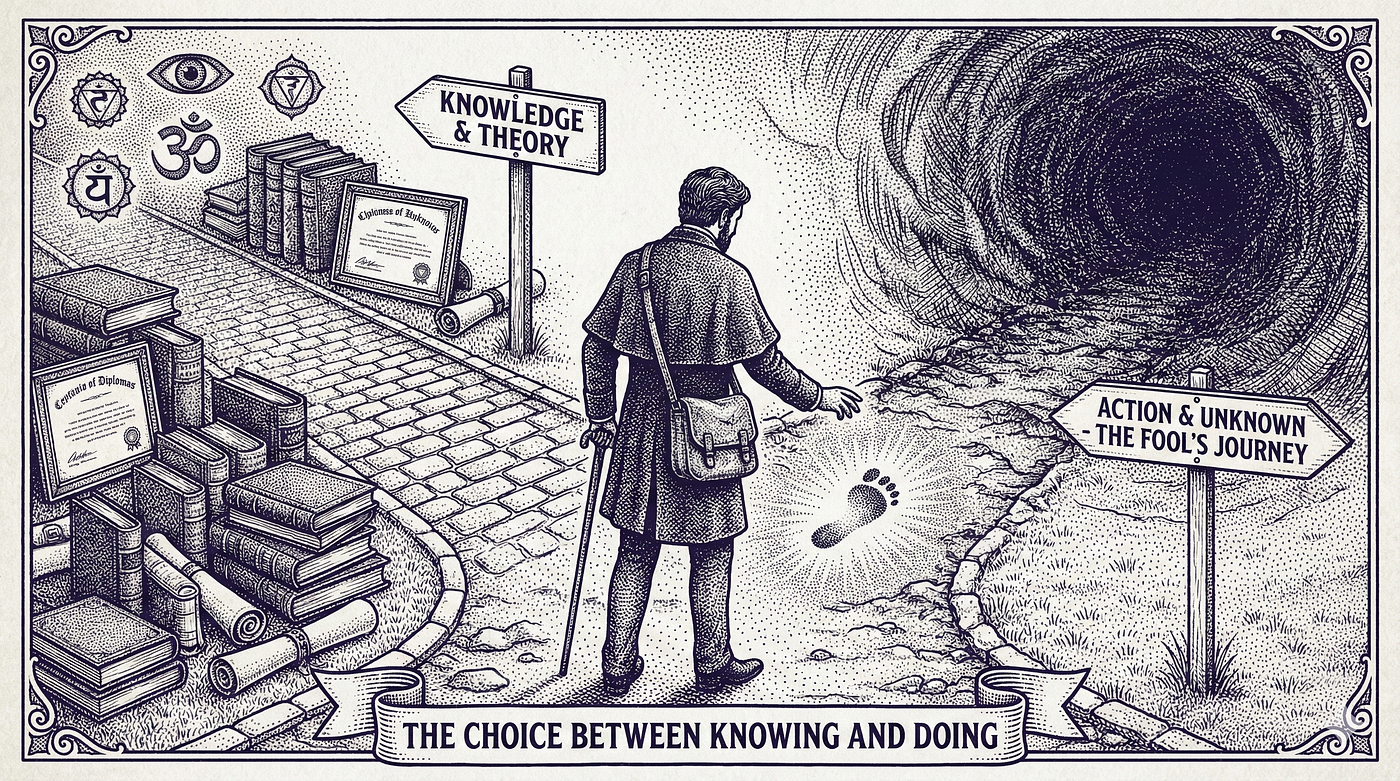
Knowing isn’t the same as embodying.
You know you should meditate. You know you should visualize. You know you should direct your attention.
So why aren’t you doing it?
Don’t answer with the polite lie. Answer with the truth:
You’re terrified that if you actually sit still long enough, you’ll have to admit you’ve been performing your entire life.
You’re terrified that if you actually visualize what you want, you’ll have to admit you don’t believe you deserve it.
You’re terrified that if you actually direct your attention, you’ll have to confront how much of your day is spent avoiding the one thing you know you should be doing.
The Monk’s Greatest Vow

Here’s what nobody tells you about monks.
Their greatest vow wasn’t poverty. It wasn’t celibacy. It wasn’t silence.
It was admitting they know nothing.
Not knowing doesn’t make you stupid. Pretending to know makes you stupid.
The expert’s knowledge becomes a cage. They “know” what won’t work. They’ve seen it tried. They’re trapped by their own expertise.
The “stupid” person doesn’t know what’s impossible. So they try it anyway.
Bob Proctor dropped out of high school. Joe Dispenza was a chiropractor who had no business talking about quantum physics. Earl Nightingale never went to college.
They succeeded because they were stupid enough not to know what they weren’t supposed to say.
The Technology Is Yours
The wisest monks never wore robes. They wore suits and spoke in language the Western mind could accept.
They smuggled enlightenment past your defenses by calling it neuroscience.
Now you have no excuse. The technology is yours.
But here’s the final truth:
The technology only works if you use it.
Not if you understand it. Not if you appreciate it. Not if you save this article to read again later.
Three minutes of breath work tomorrow morning.
Five minutes of visualization before bed tonight.
One sentence on a card, read twice a day for 30 days.
Pick one. Do it.
Or keep collecting concepts while your nervous system runs the same loops it learned when you were six years old.
The choice was always yours.
What are you actually afraid will happen if you sit still long enough to find out who you are when you’re not performing?
The monks knew the answer. The Western monks know the answer.
Now you know it too.
The only question left is whether you’re stupid enough to try.
Own Your Stupid. Rewrite Your Story.
— Robert
| The Stupid Movement
What does it mean to ‘smuggle meditation past your bullshit detector’?
Are breath work, visualization, and affirmations actually meditation?
What is the point of translating ancient practices into modern language?
Why does the article say the nervous system is in control?
What does ‘rewire hardware with software updates’ mean?
How do I choose between breath work, visualization, and the index card practice?
Why does the article emphasize doing ONE practice instead of collecting concepts?
What is the ‘Room of Images’ really doing psychologically?
Why does the article say emotion should come first in visualization?
Is the Nightingale index card method just affirmations?
What’s the ‘uncomfortable question’ the article is pushing toward?
What does ‘not knowing’ have to do with meditation and growth?
Why does the article call them ‘Western monks’?
What’s the fastest way to apply this article starting today?
What’s the Stupid Movement takeaway in one line?